

|
Is he REALLY dead? Is he hiding out? People seem
to be asking themselves that question every time they see or hear
something new about the legendary rapper Tupac Shakur, who was MURDERED
in 1996. There have been numerous albums released after his death,
countless stories and features told and written about him, and just
about 4 to 5 documentaries analyzing his existence on earth. With
the exception of the albums, which Tupac wrote himself prior to
his death, everything else has been told by someone’s perception
of him. Well, leave it to the man himself, Tupac, to tell us about
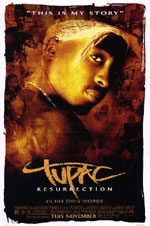
his life in his way. “Tupac: Resurrection” is an extraordinary
and riveting documentary and definitely one of the year’s
best films.
Narrated by Tupac himself, the documentary features highlights
of his glorious life and includes footage never seen before. All
of this was made possible through the help of his mother, Afeni
Shakur, who served as the executive producer of the film. Tupac
was a man who somehow knew his destiny because when you hear him
speak, you have to wonder how could he have known what would happen
later in his life. In collaboration with MTV films and directed
by Lauren Lazin, they have done a remarkable job in putting together
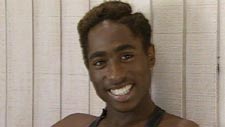
his life from when he was a child to his “hard labor”
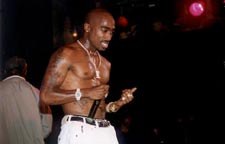
as an early rapper with Digital Underground, and to his success
as a solo artist promoting the “Thug Life” image. In
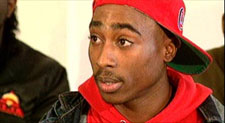
plenty of interviews that were conducted by MTV, mainly with its
star reporter at the time, Tabitha Soren, Tupac, talks about his
mother and the ups and downs she has gone through in her life, as
well as the negative spotlight that’s been on him when dealing
with the police. He also takes the blame for actions he knows he
could have controlled (drug dealing, sexual abuse conviction). He
covers most of what we had heard or seen before in regards to his
lifelong friendship with Jada Pinkett-Smith, his assault cases with
the cops, his time in prison, his first shooting in which he blames
his “friends”, and his teaming with Death Row Records
and Suge Knight. What we get is his thoughts on the matter and not
an account from a reporter.
Tupac was definitely a screen presence. He captivated you with
his lyrics, his political views, and his appearance. In all of the
films he had done, he was the scene stealer. In his first film,
“Juice”, one of the great TV film critics of our time,
the late Gene Siskel, mentioned how good Tupac’s performance
was in the film and was looking forward to seeing him in more movies.
One highlight of the film that stands out is when Tupac mentions
that when he was in prison, the letter that got him emotional pumped
was a letter from actor Tony Danza (of TV’s Who’s the
Boss). Tupac was definitely also a character that people wanted
to exploit, for the good and for the bad. He was the catalyst that
got Congress involved with condemning rap and at the same he was
the marketing machine for record labels, TV shows, and anything
else that could make a profit. The documentary doesn’t go
into the stuff that has happened since ’96 because after all,
Tupac is dead and can no longer make a comment. After watching “Tupac:
Resurrection”, and see how good is it and surreal to hear
Tupac’s voice again, you may ask yourself the question I
posed in the beginning of this review.
|