
|
About | Features | Reviews | Community | Screenings | Archives | Home |

July 2004
The Bourne Supremacy: An Interview with Matt Damon
|
| (July: Main Page * Features * Reviews * Screenings * Teen ) Current Issue * Archive |
|
By Wilson Morales
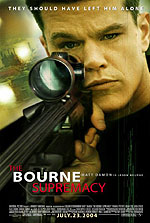 The
Bourne Supremacy: An Interview with Matt Damon The
Bourne Supremacy: An Interview with Matt DamonBesides hanging out with his best friend Ben Affleck at times, Matt Damon has created a couple of memorable characters over the last few years. No one will ever forget the Oscar he won for co-writing "Good Will Hunting" in which he played the title character or the manipulative character Tom Ripley in "The Talented Mr.Ripley". In 2002, Matt Damon played a role that would reignite the fire in some producers' eyes as he took Jason Bourne and "The Bourne Identity" to international and domestic financial success. Prior to that, he had a couple of bombs with "The Legend of Bagger Vance" and "All The Pretty Horses". After appearing in "Ocean 11" and producing the Project Greenlight films, Damon is back as Jason Bourne in "The Bourne Supremacy". In speaking with blackfilm.com, Damon talks about how he has approach his success and the appeal of the Bourne films. From Chasing Amy to The Bourne Supremacy, how have you approach your success and what you are looking for in your career?
Have you seen Kevin Smith recently? MD: Well, I was "Jersey Girl". I had one scene in the film. I'm always ready to what Kevin wants. He's good at giving me something to do in his movies. Sometimes, like in the film "Dogma", he gives me a big role. Kevin writes about what's going on in his life. With "Jersey Girl" there was this huge thing about him becoming a father and he started ruminating what would happen if he lost Jen (his wife). If Kevin keeps writing about his life, maybe a role will come out that he offers to me. The second he does, I'll take it. What is your favorite Thanksgiving or Christmas holiday tradition? MD: That's a good question because I come from a family where
my mom and dad divorced when I was 2 and my mom was with someone else
for 16 years who was a parental figure in my life. I guess my favorite
Christmas tradition around that time would be when my dad, despite the
fact that they were divorced, would come over and sleep on the couch every
Christmas Eve because he wanted to At one point recently Ben Affleck had mentioned that you guys were working on another Boston based project. Has there been any progress with that screenplay between the two of you? MD: I think the one that Ben is talking about right is the Dennis Lehane novel that he had, "Gone Baby Gone". He's got the rights to that, but I don't know what's really going on with that. A lot depends on if he wants to be in it or direct it or where his head's at with it, but I've been busy doing these other movies that we haven't to sit down and do any writing for some time. I saw him last night and it's something we talk about every time we see each other. It's just a matter of handling logistics and figuring how to be in the same place and same time. Having struggled for work for a long time and it's been seven years that we have worked consistently, and having struggled through our teens and twenties, it's funny for us to turn down work, but that's we'd probably have to do to write something. We just have to block out the time and commit to it. Do you have a desire to get back to writing? MD: Yeah. I think for both of us that probably the most creative fulfilling experience for us was "Good Will Hunting" just because we took an idea from the very beginning and shepherd it all the way through until it was a film and that's just incredibly fulfilling to do that. Even now, we would have a lot of creative input with the directors and it is a collaborative feeling like a movie like "Bourne". I was really involved in a lot of ways, but at the end of the day, it's the director's vision and it's gotta be because it's the director's medium and there's no getting around that you're kind of hired labor at the end of the day. So in terms of writing and bringing something all the way from the beginning to kind of finished form is really a feeling that we both want to have again. The aspect of the anti-casting, the anti-image casting that
you had for the initial Bourne movie and you have talked about before
but I would like you to elaborate on it within another context. Next the
success MD: Well the first part was yeah, it was a big concern when I took the job the first time. It was something that Doug Lyman, the director of the first movie, and I talked about because he thought it was really daring to cast me as this guy because of the way I look. I look so young and this guy clearly has to have a history and he's got a very dark past. People don't look at me necessary think that, so there was a lot of stuff physically in terms of getting ready. We just tried to look at every different aspect and how to kind of make this guy as believable as possible because the worst thing that could happen is that if you have a good movie but the central character is just not that believable and he's constantly taking your audience out of the movie, that's a complete disaster. The movie would just fall apart. Doug came up with certain things. He'd watched boxing on television and he liked the way boxers walked. There was something. There was directness and efficiency and a kind of security in their body in this forward momentum that he really liked. Is that why you ran in that particular way in the film? MD: No, I think that's just the way I run. I'd never seen myself run before. So I boxed for about six months before the movie and that really did help. Just the way you move around people; it's a very subtle thing but I think the sum total of a lot of those little subtleties add up into making something believable or not. A lot of the weapons training; just little tips. From the guy I was training with put in some many hours. For one thing, there was that moment in the first one where he picks up a gun for the first time and he throws it down. What it said in the screen direction was that he feels so comfortable with it in his hands that he throws it down and from that moment on, anytime he's holding a gun, it's got to look like an extension of his arm. The only other way to get around that was to go to the firing range and just put in hundreds of hours and just shoot so that I didn't have to think about the gun. It was just there and it would never be pointed at anything I wasn't prepared to destroy. My right side was always be, for instance, if you see a cop off duty at a bar and you're having a conversation, you'll know they're a cop cause they'll angle their body and you'll know if they are right handed or left handed cause they'll angle their right hip away if they're right handed even if they are not wearing a gun. That's how you talk to someone. This is incredibly deadly and harmful and you keep that away from them and you keep the distance and it's always available to you but not to them. Little things like that add up through the course of the movie if you just see someone's body moving in a certain way, suddenly they're more believable and Doug's other theory which we applied to this film also was that as many of fight sequences there are, it's really important to have me doing it cause audiences are smart enough to know that when you cut to the wide shot of the really buff stunt man doing it, it's a giveaway. Even if they can right put their finger on it, it's just something that takes them out of the movie a little bit. So it was working on all that stuff to make sure that I could do it and the other actor could do it in a way that looked real and credible and kept the allusion afloat. What about the appeal of the film in general? MD: What I really like about it and setting out to make it,
I said before, there's no reason to make it unless we can make it better
than the first one and when I heard the idea, there were 3 kind of major
tent poles in this one that I'd really liked. That, and I don't know how
you write about this without giving it away, but to just give you a sense
of why I decided to do it. First, in the first act, that she dies in a
really brutal way. This character that we went through great lengths to
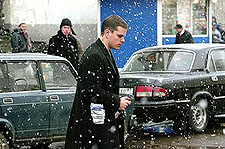
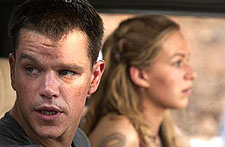
and had great fights to What about the anti-hero? MD: Basically what I liked about it was putting out a mainstream movie right now with a feeling that something terribly wrong happen to you and that your first instinct is to go and get revenge but if you just sit back and think about it and you start to look at yourself and your own life and start to take responsibility for your own actions, the most important thing you do to rejoin the human race is to go and start atoning by the things you have done and the last shot of the movie is him walking and joining a kind of sea of humanity in New York City of all places and it's the first time we see him here in this country. Those were the things I thought was a good thing to put out there right now and I hope people accept that. Who knows what the reaction of the movie is going to be? That was the reason for me to do the movie in this day and age. That's a good thing to put out there. To take somebody who we establish as the ultimate American machine weapon, whatever, that that the realization that he comes to; and in the end he does a powerful thing. He does the only thing he can with is attempt to atone and start to redeem himself. That was the idea behind it. Have you see "Matt and Ben- The Play"? MD: I haven't seen Have your comments in the book "Down and Dirty Pictures" changed your relationship with Miramax at all? MD: In the Biskind book? No, I don't think so. I don't think it has changed it. I don't think I said anything too incendiary there actually. What I said about Harvey (Weinstein) I really feel. Basically I was just saying that he's an incredible business man and that you have to be aware of that when you are dealing with him. How's Ocean 12 going? MD: We're about 75% through. We just came back from Europe and we're finishing up at Warner Bros. and it's been going great so far. Everyone's back for this one plus Catherine Zeta Jones has a great role in this one and there are a few celebrity surprises. What was the biggest psychological challenge for you in the role? This is about Bourne's move as it is about Bourne's mind. MD: Well, one of the biggest challenges starting off as an
acting thing was the fact that I don't talk a lot in the movie and that's
another thing that I really liked it. You can't really tell until the
final movie, but reading the script I only had about four scenes in the
movie where I speak, but I'm on screen for a lot of the movie so that
was a huge challenge. It's a pretty dark journey that the guy on, so to
get into mindset everyday, that was a huge challenge. The good news is
that I kind of got my requisite amount of laughter everyday when I go
home at night I'd unwind a little bit. I'd get on the pho |
| (July: Main Page * Features * Reviews * Screenings * Teen ) Current Issue * Archive |
 |
|
Terms of Use
| Privacy
Policy Copyright © 1999-2004, BlackFilm.com
|
 MD:
In terms of picking jobs, whatever philosophy I have hasn't really changed.
At first, obviously doing one line in "Chasing Amy", it was to take any
job I could get; but since "Good Will Hunting" and being offered many
movies rather than go out and audition for them, it's basically three
things that I look for. It's always a script that I like, a good director
and a good role. Usually I will settle for any two of those because the
combination of all three is really hard to come by. I felt like I had
all three with a movie like "Ripley". It was a great script, a great director,
and a really great role and a different thing that I get to do. My philosophy
hasn't changed in whatever success or failure I've had. I've had those
things in mind. Movies that didn't do so well like "All the pretty horses".
There's a version of that movie that exists that was Billy Bob (Thornton)'s
cut of it that I really do love and I'm really happy that I did that movie.
I'm still really proud of that movie in that form that no one ever saw
but with the process of doing it, I got a lot out it. It's weird to talk
about my career in terms of success. Really recently before "The Bourne
Identity", I hadn't been offered a movie in a year because "The Legend
of Bagger Vance" had come out and bombed and "All The Pretty Horses" had
come out and bomb and the word on "The Bourne Identity" was that it was
going to tank because we had pushed back the release date a couple of
times. So people will say that it always a sign that things aren't going
well, when in fact Universal (Pictures) had given us more money to go
back and reshoots and pick up a couple of things that we needed, and we
were making the movie a lot better, so we were holding the movie for the
right reason but the outward signal in the industry was that this thing
was going to suck. So no one really called and gave me any job offers
for quite some time so I went and did a play in London and it closed on
a Saturday night and "Bourne" had opened that past Friday. By the time
I got to New York; I got back on a Sunday night, Monday morning there
was something like 30 script offers. So in terms of any success that I've
had, it never feels secure.
MD:
In terms of picking jobs, whatever philosophy I have hasn't really changed.
At first, obviously doing one line in "Chasing Amy", it was to take any
job I could get; but since "Good Will Hunting" and being offered many
movies rather than go out and audition for them, it's basically three
things that I look for. It's always a script that I like, a good director
and a good role. Usually I will settle for any two of those because the
combination of all three is really hard to come by. I felt like I had
all three with a movie like "Ripley". It was a great script, a great director,
and a really great role and a different thing that I get to do. My philosophy
hasn't changed in whatever success or failure I've had. I've had those
things in mind. Movies that didn't do so well like "All the pretty horses".
There's a version of that movie that exists that was Billy Bob (Thornton)'s
cut of it that I really do love and I'm really happy that I did that movie.
I'm still really proud of that movie in that form that no one ever saw
but with the process of doing it, I got a lot out it. It's weird to talk
about my career in terms of success. Really recently before "The Bourne
Identity", I hadn't been offered a movie in a year because "The Legend
of Bagger Vance" had come out and bombed and "All The Pretty Horses" had
come out and bomb and the word on "The Bourne Identity" was that it was
going to tank because we had pushed back the release date a couple of
times. So people will say that it always a sign that things aren't going
well, when in fact Universal (Pictures) had given us more money to go
back and reshoots and pick up a couple of things that we needed, and we
were making the movie a lot better, so we were holding the movie for the
right reason but the outward signal in the industry was that this thing
was going to suck. So no one really called and gave me any job offers
for quite some time so I went and did a play in London and it closed on
a Saturday night and "Bourne" had opened that past Friday. By the time
I got to New York; I got back on a Sunday night, Monday morning there
was something like 30 script offers. So in terms of any success that I've
had, it never feels secure.
 be
there when my brother and I woke up in the morning. So he and my mother
and my mother's boyfriend would stay up after we went to be and wrap all
the gifts and get things ready for us and then they would go to sleep.
That was probably my favorite tradition growing up was waking up and seeing
all the parents there and thinking Santa Clause had come.
be
there when my brother and I woke up in the morning. So he and my mother
and my mother's boyfriend would stay up after we went to be and wrap all
the gifts and get things ready for us and then they would go to sleep.
That was probably my favorite tradition growing up was waking up and seeing
all the parents there and thinking Santa Clause had come.
 of the original film and the potential success of this film is a paradox
in American society right now because your country seems to be looking
for heroes and here's a really a dark anti-hero who has all this appeal.
So can you talk about both those aspects for you personally and then the
appeal of a movie at a time when it seems to run counter to the kind of
naiveté of the American public in seeking heroes?
of the original film and the potential success of this film is a paradox
in American society right now because your country seems to be looking
for heroes and here's a really a dark anti-hero who has all this appeal.
So can you talk about both those aspects for you personally and then the
appeal of a movie at a time when it seems to run counter to the kind of
naiveté of the American public in seeking heroes?  cast in the first movie and did all this work to establish this relationship
and create this little ray of hope in this guy's life and she's murdered
basically. So that's the big moment in the first act that I think is somewhat
bold and will be surprising for people. In the second act, I shoot a woman
in the face. Just completely in cold blood and as an audience you sit
there and see the central character do this horrible and horrible thing,
and in the third act, I go to apologize to this young woman having learned
what I lost in my own life, having visited humanity for this few years
with this relationship that I've had and understanding what it means to
have that taken from you.
cast in the first movie and did all this work to establish this relationship
and create this little ray of hope in this guy's life and she's murdered
basically. So that's the big moment in the first act that I think is somewhat
bold and will be surprising for people. In the second act, I shoot a woman
in the face. Just completely in cold blood and as an audience you sit
there and see the central character do this horrible and horrible thing,
and in the third act, I go to apologize to this young woman having learned
what I lost in my own life, having visited humanity for this few years
with this relationship that I've had and understanding what it means to
have that taken from you.
 it and I don't know. Some people have said it's funny and some people
have said it's kind of a knock, whatever. I just figure it's kind of an
extension of Project Greenlight. It's a chance to people a job. (Laughs)
it and I don't know. Some people have said it's funny and some people
have said it's kind of a knock, whatever. I just figure it's kind of an
extension of Project Greenlight. It's a chance to people a job. (Laughs)
 ne
and talk to people and rejoin humanity for the evenings but then go to
work, but it's a pretty heavy role this time around. Normally you look
for the contradictions and you have some scenes of levity, but in this
case, it was pretty intense most of the way through. So that was kind
of a challenge, to go to work and do that every day. But what helped,
incidentally, was that Berlin in the winter, it gets light about nine
in the morning and it gets dark, in terms of shootable light, at around
three or three thirty and it's overcast. The kind of mood that we were
all in for those months of shooting, we didn't see the sun for quite some
time, so I think that probably was a subconscious aid throughout the shoot.
ne
and talk to people and rejoin humanity for the evenings but then go to
work, but it's a pretty heavy role this time around. Normally you look
for the contradictions and you have some scenes of levity, but in this
case, it was pretty intense most of the way through. So that was kind
of a challenge, to go to work and do that every day. But what helped,
incidentally, was that Berlin in the winter, it gets light about nine
in the morning and it gets dark, in terms of shootable light, at around
three or three thirty and it's overcast. The kind of mood that we were
all in for those months of shooting, we didn't see the sun for quite some
time, so I think that probably was a subconscious aid throughout the shoot.