
|
About | Features | Reviews | Community | Screenings | Archives | Home |

December 2004
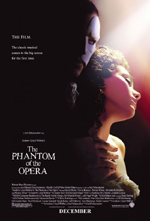
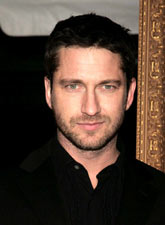
Andrew Lloyd Webber's The Phantom Of The Opera: An Interview with Gerard Butler
|
| (December: Main Page * Features * Reviews * Screenings * Teen ) Current Issue * Archive |
|
By Wilson Morales
How do you relate to someone like the Phantom who has such a grotesque physical deformity? Gerard Butler: I used the physical deformity to a certain extent by conducting research into physical deformities, but I used a more internal thing. I think the physical deformity represented emotional deformities; things inside ourselves which don't allow us fully to be open to love or to be loved. It was more the effect of that deformity that I was focusing on and it was more of an interior journey into my own dark spaces. What I identified with was the effect of pain and loneliness and fear and vulnerability that he felt as a result of having this (deformity). Of course when you spend four hours in prosthetic make-up and you really are looking at yourself and you see how revolting you've become in a way, it obviously adds another strand and helps you appreciate (the reality of the deformity) a little bit more. What was the reaction towards you in the make-up? GB: I was a What was the process of applying the grotesque make-up? GB: It was sitting in that chair for hours and having my eyes glued and pieces of string attached down my back which they pulled on to pull my eye down (demonstrates by tugging his eye downward), and it would just stay open with a piece of metal. It got really dry as well and it was uncomfortable. Whenever they released it I was sure I was going to be left with these bits of skin hanging. I had alcohol in my eye from rubbing off the glue for my eyelashes. Three people were poking your face for hours on end. It was like torture. By the time I finished I was ready to bite somebody's head off. What did wearing the mask do for your performance? GB: I had to get used to wearing a mask and wearing a prosthetic
and performing with those things while singing and expressing myself through
stylized movement, while keeping it as human as possible so the audience
could be closer to the horror of the Phantom. (Because of the mask) so
much was said purely through the eyes. I didn't want to be flapping What was the process in selecting the right mask? GB: Choosing the right mask helps you to understand where (the character) is coming from. We went through many masks. It was very particular leather that as soon as you smudged it, you had to get a new one. There were a lot of pressing masks on my face and slipping masks on so we went through about fifty-five masks. I think I have a couple of them in my house somewhere. The mask was a whole other character to itself. I tried on hundreds of masks before we found the one that we finally wanted because we had ivory masks and wooden masks and plastic masks, leather masks. Then we have masks of different shapes that went a certain amount over your head or how far down the mouth, how much around the mouth did it come. What was the size of the eye? The big one was the facial expression (the mask gave). The leather was better than the ceramic but the eye-size on the wooden one was great so they had to transfer that to the leather mask. I had to wait for them to be made. Q: What do you remember about the audition for composer Andrew Lloyd Webber? A: I support the Celtic football team which was in the semi-final
for the European cup and it was the first time they've been in for many
years. I went to the game the night before (the audition) in Glasgow with
all my crazy Glaswegian friends who screamed at th What was it like living and breathing the music of the Phantom of The Opera? GB: It had its pluses and minuses at the time. But if you abandoned yourself to that world and that character and that period surrounded by extras in the same period clothing and costumes and listening to that music all the time, you give in and you let that music become a part of your soul. Then you can live it and breathe it which is really what I was trying to do. I went from somebody who didn't sing to somebody who didn't speak. For the longest time all I was doing was singing. I remember I had serious problems expressing myself (by talking). (It was funny) to see the crew who were big heavy guys with tattoos who probably had bulldogs at home who were plasterers and carpenters with their butt cracks hanging out walking around (singing) "Past the point of no return!' and whistling (the song) Masquerade because you were hearing this music all the time. There's a lot worse music to have floating around in your head. What was your singing experience prior to this role? GB: I sung in a rock band with no formal singing training.
We're talking (singing) The Doors, a bit of Eric Clapton, Ji What was the hardest part of the performance? GB: The singing was the hardest. I came in as an actor, who sung that performance but always treated the lyrics as dialogue. But it was the emotional journey that he had to take and his feelings were more important than just singing a perfect song. When you see his dissension into madness and fury (by the end), that was five weeks solid of filming with only three or four hours of sleep. I was getting to bed about 10 P.M. so wound up and not getting to sleep by eleven and because I was putting the prosthetics on for five hours I had to be up at three in the morning. Talk about that scene where he descends into madness and has to confront his nemesis played by Patrick Wilson. GB: I l When did the acting bug bite you? GB: I was twelve years old and I was in (the musical) Oliver
in the workhouse of Fagan's gang. It was a dream for me performing at
the Glasgow Kings Theater and having my family come and watch me. I was
in that because the (acting) bug hit me then. The bug came and went and
then I was fifteen I was possessed after this dream that I had. I was
living in this fantasy world which was inspired by a movie I had watched
called Krull which is actually crap (but it wasn't then when I was fifteen).
I went to my mom the next day and I said, "I have to be an actor.' And
it (the bug) went away again when I was at school and I chose law, only
to find that when I was training as a lawyer that Was it hard to shake the character of the Phantom when the filming ended? GB: Yes. It took me a good couple of weeks to get out of that space. I went straight away on a holiday and just relaxed. At the end I was exhausted. I literally said to my agents, "you know what, I don't want to work for a long time.' I needed some time off. I knew I'd just done one of the most amazing things that I will ever get a chance to do. Just to be part of a musical that's not your background and to pull it off and to think that we've done something that's really special.
|
| (December: Main Page * Features * Reviews * Screenings * Teen ) Current Issue * Archive |
 |
|
Terms of Use
| Privacy
Policy Copyright © 1999-2004, BlackFilm.com
|
 mazed
and upset by the looks I got just walking around the studio. I wanted
to say, "what's your problem? What are you looking at?' It illuminates
the ugliness and the beauty that exists within each of us, and that's
what this story represents to me.
mazed
and upset by the looks I got just walking around the studio. I wanted
to say, "what's your problem? What are you looking at?' It illuminates
the ugliness and the beauty that exists within each of us, and that's
what this story represents to me.  my
hands about and be theatrical. I had to appreciate if it was uncomfortable
for me to wear a mask then it was uncomfortable for him (the character)
as well. There was a lot of bruising from the mask. It would get so sticky
sometimes that when you pulled it off you felt like you were literally
ripping your face and I'd be left with bruising down my face and along
my check. I suffered for my art.
my
hands about and be theatrical. I had to appreciate if it was uncomfortable
for me to wear a mask then it was uncomfortable for him (the character)
as well. There was a lot of bruising from the mask. It would get so sticky
sometimes that when you pulled it off you felt like you were literally
ripping your face and I'd be left with bruising down my face and along
my check. I suffered for my art. 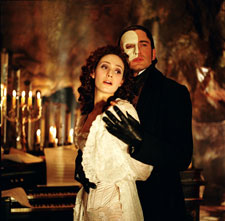 e
top of their lungs the whole night and I had to sit there and clap to
protect my voice because I was singing for Andrew Lloyd Webber the next
day in London. I wasn't nervous. I treated this whole thing as an interesting
idea because it was kind of unusual that they came to me in the first
place. In the moment of doing the audition it was exceptionally nerve-wracking
when Simon Lee the musical director started playing the piano in a drawing
room at Andrew's house and (the director) Joel (Schumacher) was sitting
right in front of me with a big smile on his face because he so appreciated
what I was going through. Andrew was sitting in the back with his arm
clapped over his face. I suddenly thought, "what the hell am I doing here?'
I had never had a singing lesson in my life and it was all new to me.
My right leg started shaking and I honestly couldn't control it and Simon
Lee started having a fit on the piano inhaling dramatically. I thought,
"what's the matter with him, I'm one who was nervous!' He told me afterwards
that he was trying to tell me to breathe because apparently I wasn't.
e
top of their lungs the whole night and I had to sit there and clap to
protect my voice because I was singing for Andrew Lloyd Webber the next
day in London. I wasn't nervous. I treated this whole thing as an interesting
idea because it was kind of unusual that they came to me in the first
place. In the moment of doing the audition it was exceptionally nerve-wracking
when Simon Lee the musical director started playing the piano in a drawing
room at Andrew's house and (the director) Joel (Schumacher) was sitting
right in front of me with a big smile on his face because he so appreciated
what I was going through. Andrew was sitting in the back with his arm
clapped over his face. I suddenly thought, "what the hell am I doing here?'
I had never had a singing lesson in my life and it was all new to me.
My right leg started shaking and I honestly couldn't control it and Simon
Lee started having a fit on the piano inhaling dramatically. I thought,
"what's the matter with him, I'm one who was nervous!' He told me afterwards
that he was trying to tell me to breathe because apparently I wasn't.
 mmy
Hendrix and a lot of our own covers but it was more rock n' roll music.
We were called Speed and we weren't signed. I was training to be a lawyer
at the time. I was president of the law society at Glasgow University
and my bass guitarist was my secretary of my law society; the lead guitarist
and writer worked at the law firm that I worked.
mmy
Hendrix and a lot of our own covers but it was more rock n' roll music.
We were called Speed and we weren't signed. I was training to be a lawyer
at the time. I was president of the law society at Glasgow University
and my bass guitarist was my secretary of my law society; the lead guitarist
and writer worked at the law firm that I worked. 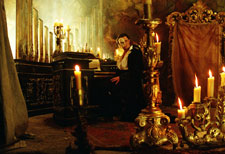 oved
the lair scene. It was the most powerful thing I ever did as an actor.
That was six days back to back where I was in prosthetic make-up, not
sleeping and coming on set with tears streaming, losing my mind. I know
that inside me when I was looking into the eyes of Patrick Wilson it broke
my heart. I almost killed him (by tightening the rope around his neck)
and literally I was about to break his neck. He endured the lot in that
scene and never bitched.
oved
the lair scene. It was the most powerful thing I ever did as an actor.
That was six days back to back where I was in prosthetic make-up, not
sleeping and coming on set with tears streaming, losing my mind. I know
that inside me when I was looking into the eyes of Patrick Wilson it broke
my heart. I almost killed him (by tightening the rope around his neck)
and literally I was about to break his neck. He endured the lot in that
scene and never bitched. 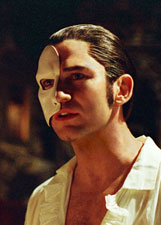 it
wasn't for me so I became an actor.
it
wasn't for me so I became an actor.