|
|
About | Features | Reviews | Community | Screenings | Archives | Studios | Home |

September 2005
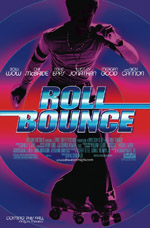
Roll Bounce: An Interview with Director Malcolm D. Lee
|
| (September: Main Page * Features * Reviews * Screenings * Teen ) Current Issue * Archive |
|
By Wilson Morales When you think about the films that are currently playing, there aren't a lot that appeals to all ages. With the exception of the animated films that studios hope parents will bring their young children to see, there aren't that many films that both adults and kids can appreciate. Director Malcolm D. Lee hopes to bring in an audience that anyone can enjoy by going back in time and discussing the roller skating era amongst other things. His latest film, "Roll Bounce", is set in the 1970s when roller skating ruled the floor. Having done "The Best Man" with Taye Diggs, Sanaa Lathan, and Morris Chestnut, and "Undercover Brother" with Eddie Griffin, Aunjanue Ellis and Denise Richards, Lee has cast rapper-actor Bow Wow in the lead role along with Chi McBride, Nick Cannon, and Mike Epps, and newcomer Brandon T. Jackson. In speaking with blackfilm.com, Lee talks about the different aspects of the film and working with Bow Wow and Mike Epps.Can you talk about the tone of the film? You sort of went from drama to comic relief at times. I can only imagine that it was a challenge to strike the right balance. Did you struggle with that? Malcolm D. Lee: I think some studio executives felt like
there was a struggle there, but these are the types of films I like to
make. If you look at "The Best Man", there's a lot of humor in that, but
I never consider that movie a comedy. I felt that it was a drama with
comedic elements and comedic parts to it. With this film, I felt similarly.
With the tone, I set in reality; that it needed to be, not light, but
at the same time, I didn't want it to be heavy because the film does deal
with some heavy subject matter in terms of the mother having past away.
At the same time, this relationship between the dad and X (Bow Wow), I
really wanted to come out and treat it in a way that made sense. As far
as the kids are concerned, it's just like life. People have their comedic
moments in life and back i At any point, were there any changes made in the script to balance it out so that at the end of the movie, it still comes across as dramatic? MDL: Everything that was done to the script was all to service the story. It wasn't necessary to make it more dramatic or comedic; it was to service the story and have that dramatic build in terms of not only the relationship between X and Curtis, his father, but where these guys are coming from, the south side of town to the north side and elevating themselves and taking a little pieces of where they come from and bringing it to this place where they can compete. There were certain movies that influenced me in doing this film such as "Bring It On", "Saturday Night Fever" and "The Karate Kid"; all these sorts of films where your characters start at one place and they have to find it within themselves to have the fortitude to elevate and overcome certain obstacles. Along those lines, how tough is it to steer away from cliches? There have been lots of films made that have the big fight, big game, or square-off at the end. What are some things that you look out for? How do you try to avoid similarities? MDL: I think you have to just stay as true to the story as possible. Make sure the story is authentic and as believable as possible; that you are on every moment that's in your movie. I certainly had some trepidation because when I first read the script, it reminded me of "Drumline" and the similarities with the skate-off at the end, but it's a different sport or different dance. It is a battle that these guys are having. I just tried to put my sensibility into it say that this is what I want to see. I don't cliches. I don't like those moments where you go, "Here we go again." I want people to go, "All right! Let's get it on!" We already know how movies are going to end, but we just don't know how we are going to get there. I think the ending of the film certainly avoided the cliches scenes I have seen before. MDL: It's funny that you say that because audiences are very
conditioned to have their heroes as the protagonist come through at the
end, and we had a good amount of people from test screenings say that
that didn't like the end, but I never felt as if I should change the scene.
The scene wasn't about X winning or losing. It was about him trying to
achieve his very best. Was there any pressure from the studio? MDL: No, not at all. They believed in the same thing. There was never a question. How much research did you do for this film as opposed to your previous two films? MDL: I think I did more research on "Undercover Brother". I did no research on "The Best Man". That was something that came out from my own head. With this film, I looked at the history of roller skating. There was a documentary that Tyrone Dixon, who served as an associate producer on this film, did about roller skating as it is today and that was something that was extremely informative and you have to go back to books about the 70s and what was happening during those times. Not just the stereotypical cliched stuff like the bell bottoms and everyone wearing afros. Unemployment was very high in 1978, the summer of '78 in particular. That was an authentic thing and it was already part of the script, so I was like, "Ok, how does it manifest itself?" I didn't do an extensive amount of research. I just really wanted to look at whatever skating information I could find and for the kids, it was about immersing them in ∞∆70s culture as much as possible with the music, television shows, and clothes; and getting them away from ipods, cell phones, and blackberries, and whatnot. Most of us didn't have these things when we were kids. For Bow Wow to be X, he had to be the kid that loves to roller skate and misses his mom. Do you have any personal memories of skating from that era? MDL: Not really. I wasn't really a skater. I have a pair of skates and when it was time to skate, at least at camp, I was going, but I wasn't a skate head. I wasn't doing spins and donkey kicks and crazy leg moves and stuff like that. Someone had asked me earlier if I was into skating and I said not really. I felt it was a very visual world and a world that should explored on screen. The soundtrack to the film brings back a lot of memories. What are some of your favorite music of that era? MDL: Well, a lot Bow Wow had mentioned that you and the producers came to him. What made him the right choice for the lead? MDL: We eventually came to him. This is true, but it wasn't
like we were going to make it easier for him. I personally wasn't a Bow
Wow fan. This kid is cute and I'm not a big fan of his music, but he's
got something. I looked at a couple of auditions, and I wasn't convinced
of his talents, but I wasn't saying, "There's no way". There's something
there with this kid. I met him and he was giving very canned answers,
very rehearsed; plus his manager was there so he was doing most of the
talking anyway, so I was like, I don't know anything more after this meeting
than I did before, about him. He's has to go audition and that's going
to be that. I had convinced the studio to go with an unknown for a second,
but before we pull the trigger, let's check out Bow Wow and he came in
and I felt he could do it. He read a couple of scenes and felt he could
do it and I told him, "Listen Bow Wow, you can't be yourself. You have
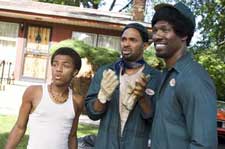
never done a movie where you have been anything other What did you want Mike Epps and Charlie Murphy to bring to the table? Mike had mentioned that you wanted him to do "his thing". MDL: It's funny. I have been a fan of Mike for a minute. He just tickles me. I'm not a big fan of the "Friday" movies, but he is a funny, sympathetic guy. I think he's got real talent that's inherent, not just with his humor; and with the film, I wanted some comic relief in there. We added them to the party scene. They weren't in there at first. I always want comedic actors to go off-book and just rip it, but I want one take with the dialogue that was written, but they never gave me that. They just started doing their thing and they had never met before that day, so they were just a good chemistry and natural fit and Mike is just a very talented guy and came with a lot of stuff. Every take, he did something new and also, because these guys are used to off-color humor, it was refreshing to know that they can go other places with their humor and not make it R-rated and stick to the era of the ∞∆70s too. Some of the things they said were very germane to the ∞∆70s, so I was proud that he went there. When I asked him where he got the jokes from, he said he didn't remember how it came up, he just did it. What was the toughest thing to shoot, the skating scenes or the dramatic scenes? MDL: Well, those were both tough, but I would say the emotional scene when X smashed the car was tough and the scene at the kitchen table because they were very emotional and Chi and Bow Wow pulled them off very well. Did you have a lot of takes with the car? MDL: We had about three different cars, but we really didn't
need to do too much. Plus, that car was hard as hell. They don't build
cars like that nowadays. A bat couldn't as much but break a window and
headlights and stuff. Again, those are tough scenes to do because the
actors put themselves in a place where they have to be very emotional
and anything can happen. They can scream, they can cry; who knows wha What's the selling point to this film and what do you have coming up next? MDL: It's a movie for everybody. It's a feel-good movie. It's a family movie without being corny or preachy. It's a lot of fun and has some substance to it and it will be a good time at the theater. I think there has been some drivel this past summer and this is a story about people. It's a story about a skating world that has yet to be explored in a dynamic way. It's not a remake or based on a television show. As far as what's next for me, I have a couple of things that I'm juggling. I have a script of my own that I'm working on. There's a couple of baseball movies; one's about the Harlem Little League and the other is a time travel story called Brushback; that's about a player who gets beaned and wakes up in the Negro Leagues. There's another story called The Champions, a modern day "Parenthood" that I'm developing with Norman Vance Jr. Do you think the film will jump start a craze? MDL: I don't know. That would be nice. Skating is certainly in the American consciousness and it's even more so now. ROLL BOUNCE OPENS SEPTEMBER 23, 2005 |
| (September: Main Page * Features * Reviews * Screenings * Teen ) Current Issue * Archive |
 |
|
Terms of Use
| Privacy
Policy Copyright © 1999-2005, BlackFilm.com
|
 Roll
Bounce: An Interview with Director Malcolm D. Lee
Roll
Bounce: An Interview with Director Malcolm D. Lee  n
X's house, there's a lot of heavy stuff going on; his freedom is really
about skating and being with his friends; so it wasn't a tough balance.
It's one of the things I like to do in movies.
n
X's house, there's a lot of heavy stuff going on; his freedom is really
about skating and being with his friends; so it wasn't a tough balance.
It's one of the things I like to do in movies. 
 of them are in here. Certainly, Chic was a great group. There were some
songs that were written into the script and some things that I chose to
put in there. I really wanted to make sure that it felt authentic to each
particular rink. For example, in the Garden rink, there are only two songs
in there, but there are funky songs, Roll Bounce and Flashlight. When
you get to Sweetwater roller rink, I wanted the songs to be pop or pop
soul, and make sure that these are the songs that they would play in the
rink. There are not just going to play any old thing. So you have "Rock
the boat" and "Baby Come Back" by Player. These are songs that take you
back or they still feel really good. Even Bill Withers' Lovely Day is
a very popular song amongst the African American audience I think. I don't
know how popular it is beyond that. It's a song that they would play every
once in a while on those throwback stations, but it's such a great song
that you will recognize and it felt so right for this movie. That's X's
mood every day. When he's delivering the papers, it's
a lovely day, and he's having fun. He can put the death of his mom behind
him or at least to side for the moment.
of them are in here. Certainly, Chic was a great group. There were some
songs that were written into the script and some things that I chose to
put in there. I really wanted to make sure that it felt authentic to each
particular rink. For example, in the Garden rink, there are only two songs
in there, but there are funky songs, Roll Bounce and Flashlight. When
you get to Sweetwater roller rink, I wanted the songs to be pop or pop
soul, and make sure that these are the songs that they would play in the
rink. There are not just going to play any old thing. So you have "Rock
the boat" and "Baby Come Back" by Player. These are songs that take you
back or they still feel really good. Even Bill Withers' Lovely Day is
a very popular song amongst the African American audience I think. I don't
know how popular it is beyond that. It's a song that they would play every
once in a while on those throwback stations, but it's such a great song
that you will recognize and it felt so right for this movie. That's X's
mood every day. When he's delivering the papers, it's
a lovely day, and he's having fun. He can put the death of his mom behind
him or at least to side for the moment.  than yourself. So, you're going to have to know what's it like to be a
kid from 1978; a teenage from that year and dealing with all these things
that hurt you emotionally." He took to the task and I think he came through
with flying colors and one of the people that helped him get through that
path and places was Chi McBride. He really brought a lot of good stuff
out of him and it's the best thing Bow Wow has done. He stepped up and
he could skate.
than yourself. So, you're going to have to know what's it like to be a
kid from 1978; a teenage from that year and dealing with all these things
that hurt you emotionally." He took to the task and I think he came through
with flying colors and one of the people that helped him get through that
path and places was Chi McBride. He really brought a lot of good stuff
out of him and it's the best thing Bow Wow has done. He stepped up and
he could skate.  t's
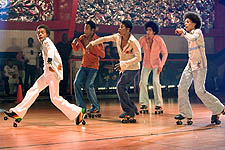
going to happen. You just help them prepare to get into that place. With
the skating, that was a challenge because they was so much to shoot, but
you are shooting double coverage with your doubles and with your actors
and you want the right amount of coverage because they wanted an MTV style
dance, video-typed, square off or number. Well, they are going to be what
they are going to be. They are going to be germane to the era. We'll try
to get as much coverage as we can. I got to blossom more as a filmmaker
in terms of using cranes and designing different rigs to get the coverage.
Plus, we had restrictions on Bow Wow and Khleo Thomas, who plays Mixed
Mike, because they are under age and they can only work 9 Æñ and 10 Æñ
respectively. Bow Wow was 17 when he did the film. He didn't have his
high school equivalency so he couldn't get around that.
t's
going to happen. You just help them prepare to get into that place. With
the skating, that was a challenge because they was so much to shoot, but
you are shooting double coverage with your doubles and with your actors
and you want the right amount of coverage because they wanted an MTV style
dance, video-typed, square off or number. Well, they are going to be what
they are going to be. They are going to be germane to the era. We'll try
to get as much coverage as we can. I got to blossom more as a filmmaker
in terms of using cranes and designing different rigs to get the coverage.
Plus, we had restrictions on Bow Wow and Khleo Thomas, who plays Mixed
Mike, because they are under age and they can only work 9 Æñ and 10 Æñ
respectively. Bow Wow was 17 when he did the film. He didn't have his
high school equivalency so he couldn't get around that.