
|
|
About | Features | Reviews | Community | Screenings | Archives | Studios | Home |

April 2006
United 93: An Interview with Paul Greengrass
|
| (April: Main Page * Features * Reviews * Screenings * Teen ) Current Issue * Archive |
 United 93: An Interview with Paul Greengrass
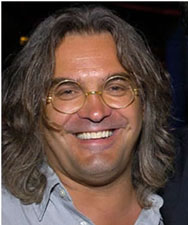
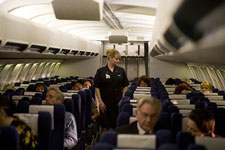
By Tonisha Johnson Rumors and Stories. This is what the September 11 attacks have crumbled to. Each one is different. Each hero sizing the main character as brave and diligent. Almost creating a ghost-like saint; but the stories from United 93 is possessed. They are the only terrorist attack recorded with conversations, memories recalled by emotionally distraught passengers who called home to say goodbye. Not the normal goodbye as in åsee you later' or åsometime soon'. A scary, final goodbye as they knew death would become them. But they weren't going down without a fight. This extraordinary 90 minute reenactment depicts a grizzly story that gives new meaning to the phrase åby any means necessary'. Paul Greengrass reveals nothing but tells everything. His storytelling style in United 93 is told through the eyes of the traveler. No script. Just based on printed documents and family interviews, this soft-spoken filmmaker discusses the strategy and motivation behind the making of United 93. Are there any concerns being the first major studio development about this eventful day? Paul Greengrass: The stakes were high. It's an important subject. It affects many people's lives. There's a responsibility to be mature and not cause offense but to tell the truth as you see it. I think today... and we made some decisions on what kind of a film would stand the best chance for fulfilling that criteria. This was a small film. It wasn't a big blockbuster filled with movie stars. You have to look at the stakes before you start and you have to be clear about what you want to do, what you want to say. What did you want to say? Paul Greengrass: Well, that it seems to me that in my country
and in yours, we're not agreeing about what's happened since 9/11. But
I wanted to reach back How did you gather the information? Based on the recent cock pit flight recordings release, do you ever think of going back and changing it to reflect that data? Paul Greengrass: When I made this film, bare in mind, I spent
a good deal of my career making films about these kinds of subjects. A
lot in Northern Ireland, but not just Northern Ireland, but in the Middle
East and elsewhere, not everything I've ever made has been on the subject
of terrorism, but I've returned to it numerous times and I suppose over
the years that there is a place for films that tell you what happened.
Now, you have to gather your material as comprehensively as reasonable
as you can within a period of time that you've got to make the film. You
need, from my view, to gather together people who can help you. Who are
willing to recreate that from a position of expertise. You can't just
do it with actors, although actors are important. You need to get the
cross fertilization between actor and professional people, so that you
gather together in a place for a couple of months, and together you say
let's try to explore a believable truth based on what we can know. You
gather together a group of actors, the families, real pilots, real stewardesses,
real military, from that day real air traffic controllers, various people;
and you have a conversation. You don't all agree with each other on the
contrary, you try and synthesize this thing. I mean, wou Is it more of a dramatic recreation of what you thought happened? Paul Greengrass: No. You take all the available facts as you can know them at that moment in time and you synthesize those first and then you work those out in conjunction with the expertise that as a group you have and you come up with something that is a believable truth. You start with the 9/11 commissions and all the declassifications of the 9/11 commissions including a 120 page document about flight 93. You start with a whole mass of information which you make sense of in a written document before you ever begin and that's what you work with. Since this film is predominately 99% done, would you consider taking a look at the 10 pages of transcript recently released from the cock pit flight recorder and tweaking something? Paul Greengrass: I looked at them and I thought and we subsequently got some tapes from N.E.A.D.S, the military recordings and it was very... we were pretty close, you know? We were pretty close. One of the striking things about the film is there's really
no identificati Paul Greengrass: Why not identify people persay. For the
very simple reason in that, if you were writing the film that I didn't
want to write or direct, which would be the sort of film that was a writers
construct of today, it would have seemed that you and I would sit down
next to each other, a 13 billion deal or whatever, and we'd have one of
those scenes that goes... And you'd have to look for a thousand ways to
create back story. It can be done very well or not very well. That's not
my point. My point is this, that in reality, when all of us get on an
airplane, we have little conversation. We might have a bit but more often
than not we travel alone. The people who got on that airplane that morning
were unexceptional. They were like you or I or anybody. They were just
getting on a routine flight and what interested me was the way, when faced
with this unimaginable event, collectively they moved from a position
of being held in abject terror from the back of the airplane to within
about 20 minutes basically fermenting an insurrection and that to me wasn't
about the individual characters. You know enough to get a visual sense
of the characters, the stewardess in the front and in the back, enough
I think to recognize those distinctions. But to me it's always about creating
the interaction between the hijackers and the hijacked because that's
our world today. My whole... the thing that interested me most about making
this film was the quirk of fate, that quirk of fate being that United
93 was on the ground for 40 minutes just in routine ground air traffic
control difficulties on that day. What that meant was, that by the time
that airplane was hijacked it was just before 9:30. 9/11 was substantially
over; it had been half an hour since the towers had been struck. 77 was
a minute or two away from striking the Pentagon. What that meant was that
those passengers on United 93 were the first people, I think, to inhabit
our world, which was the post 9/11 world. The world dominated by what
are we going to do? How we can, as a society, not necessarily, avoid that.
Not want to look at that. Not want to confront those hard choices. Not
want to deal with the fact that it's difficult to find and answer, cause
it is, but those passengers did not have our luxury. They couldn't avoid
it. That was their choice. Start, clear; they knew exactly what they were
dealing with. And they came to believe they knew what the stakes were
and in that interaction between them What about the characters of the hijackers? They really stick in your mind. Paul Greengrass: Well, I wanted them to be real. I wanted them to be a very very difficult thing to achieve. Bare in mind I just finished this film Friday morning. So I haven't actually seen it. What I was trying to do was something encouraging. I think those four young actors did an extraordinary job. To do something very difficult. To be both small and inconspicuous and unformitable in every way but also dangerous, lethal and terrifying; two totally contradictory things. And also to show us something very very important I think about 9/11 to hope comes through. I certainly believe it will come through to audiences, in other parts of the world. That there were two hijacks on that day. There was the hijack that we all know about, the hijack of innocent people, four airplanes, destined destruction on an unimaginable scale. All the things we know of. But there was a second hijack which is the hijack of a religion; Islam, by a group of young, extremely zealous, pious... ideologically diluted young men, who when they got up to kill, as we know from the cock pit voice recorder, they did it in the name of their God. When I had looked at the cock pit voice transcripts because it was a call of ours, as a group, we thought that well, when they killed that woman, stewardess, what would they have done? They invoked their God. We thought they had done that, through evidence. People had said they did that. But you can't be sure when people look at that tape that's exactly what they did do. And you see that clearly, that in that act, they're hijacking us and they are also hijacking Islam. That's one of the terrifying things about that day and one of the things that stay with us. How meaningful is it to you to be opening at the Tribeca Film Festival? Paul Greengrass: Incredibly important. Honored because it's New York. Anxious because it's New York. Humbled because it's New York. I was literally a boy when I first came to this city. I was 18. I spent most of that year here. Without any exaggeration I became a man in this city. I remember walking streets. The debate of åtoo soon'; what are your thoughts? Paul Greengrass: In the too soon debate, you don't know until people see it. The families have seen it and the families have been incredibly supportive. How important was it for the actors playing the American passengers to meet with the families? Did you encourage that? Paul Greengrass: Before filming, it was up to the families. Did they want to be contacted or would they rather not. And most of them pretty much, I think, most of them wanted to be. I think most of the actors did one way or another. Subsequently, to that, I don't think any of them met at that point, but I think some of them had. It was an amazing couple of days when they watched that film. No one knows what happened prior to boarding the plane. In the film, United 93, you show one of the terrorists making a phone call and saying åI Love you'; why did you decide to humanize them? Paul Greengrass: I don't think that you can watch this film
and not think that they were... that they film judges them for their most
appalling acts. They question is, does it make it easier for us if we
think that their not human? Because I think it does and I think that we
need to confront the fact that this danger remains. There are a lot of
young men who flock to that banner. Who are hijacking Islam and perverting
it. And the one thing that we can know about this day without a shado Copyright 2006 Tonisha Johnson |
| (April: Main Page * Features * Reviews * Screenings * Teen ) Current Issue * Archive |
 |
|
Terms of Use
| Privacy
Policy Copyright © 1999-2006, BlackFilm.com
|
 to
the common ground, and the common ground is whatever it is that happened... it
began that morning. I think we all agree of that. and so lets go back
and look at that, let's try and examine, in detail, and see what it can
tell us about what happened and where we've come from. And I think, I
hope, that it does that. There will be many other films to be made about
this subject, believe me but I thought that that was a responsible and
a reasonable place to start.
to
the common ground, and the common ground is whatever it is that happened... it
began that morning. I think we all agree of that. and so lets go back
and look at that, let's try and examine, in detail, and see what it can
tell us about what happened and where we've come from. And I think, I
hope, that it does that. There will be many other films to be made about
this subject, believe me but I thought that that was a responsible and
a reasonable place to start. 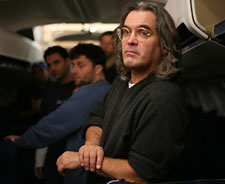 ld
you really have picked up a trolley and run it from the back of the plane,
they mythology I believe, the flight 93 that the passengers ran the trolley
from the back of the plane. Well, when you sit in a real airplane and
your with real stewardesses, they will tell you that that could not have
happened. Could not have happened because they have a hard enough time
walking the trolley up and down the isle; secondly and your sitting there,
40 feet or less from a person with a bomb... would you really advance on
a person from behind a trolley? Or would you choose your biggest fastest
person and run because speed would be of the essence. You might ... forgive
thoughts of judgment an attempt to time create something that feels truthful.
ld
you really have picked up a trolley and run it from the back of the plane,
they mythology I believe, the flight 93 that the passengers ran the trolley
from the back of the plane. Well, when you sit in a real airplane and
your with real stewardesses, they will tell you that that could not have
happened. Could not have happened because they have a hard enough time
walking the trolley up and down the isle; secondly and your sitting there,
40 feet or less from a person with a bomb... would you really advance on
a person from behind a trolley? Or would you choose your biggest fastest
person and run because speed would be of the essence. You might ... forgive
thoughts of judgment an attempt to time create something that feels truthful.
 on
to the American passengers. You go into the movie not knowing who Todd
Beamer is and you may not know when you leave. But what is interesting
is the identities of the hijackers are very well developed and you get
to sort of know who they are, just at least by the expressions on their
face. That's a pretty bold move as a director, I'm curious to hear why
you chose to go that route?
on
to the American passengers. You go into the movie not knowing who Todd
Beamer is and you may not know when you leave. But what is interesting
is the identities of the hijackers are very well developed and you get
to sort of know who they are, just at least by the expressions on their
face. That's a pretty bold move as a director, I'm curious to hear why
you chose to go that route?  as
a group and those hijackers is our world today. And that's what this film
is about. And I think whatever you think about what has happened in our
world since 9/11, I hope you can look at this film and see some common
ground.
as
a group and those hijackers is our world today. And that's what this film
is about. And I think whatever you think about what has happened in our
world since 9/11, I hope you can look at this film and see some common
ground. 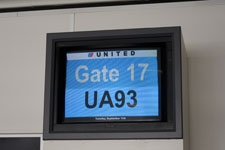
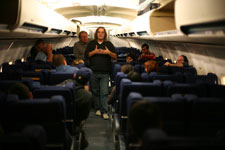 w
of a doubt is that there was nothing exceptional about those young men
either. Nobody noticed them. Nobody sitting next to them said, you're
not human. They looked like us. They looked unexceptional and with respect
to the particular scene of I Love you, well, number one, that's what he
did. And number two, I wanted the film to be framed to by two I Love you'.
Burnett, Jr. sits down next to him and makes a phone call. Burnett, Jr.
makes a hum drum business call, completely unaware of anything abnormal.
And the man sitting next to him says I Love you because he's about to
go off and commit mass murder. An hour and 40 minutes later, Burnett,
Jr. picks up the phone, calls his wife and says I Love you. I wanted it
to be symmetry.
w
of a doubt is that there was nothing exceptional about those young men
either. Nobody noticed them. Nobody sitting next to them said, you're
not human. They looked like us. They looked unexceptional and with respect
to the particular scene of I Love you, well, number one, that's what he
did. And number two, I wanted the film to be framed to by two I Love you'.
Burnett, Jr. sits down next to him and makes a phone call. Burnett, Jr.
makes a hum drum business call, completely unaware of anything abnormal.
And the man sitting next to him says I Love you because he's about to
go off and commit mass murder. An hour and 40 minutes later, Burnett,
Jr. picks up the phone, calls his wife and says I Love you. I wanted it
to be symmetry.